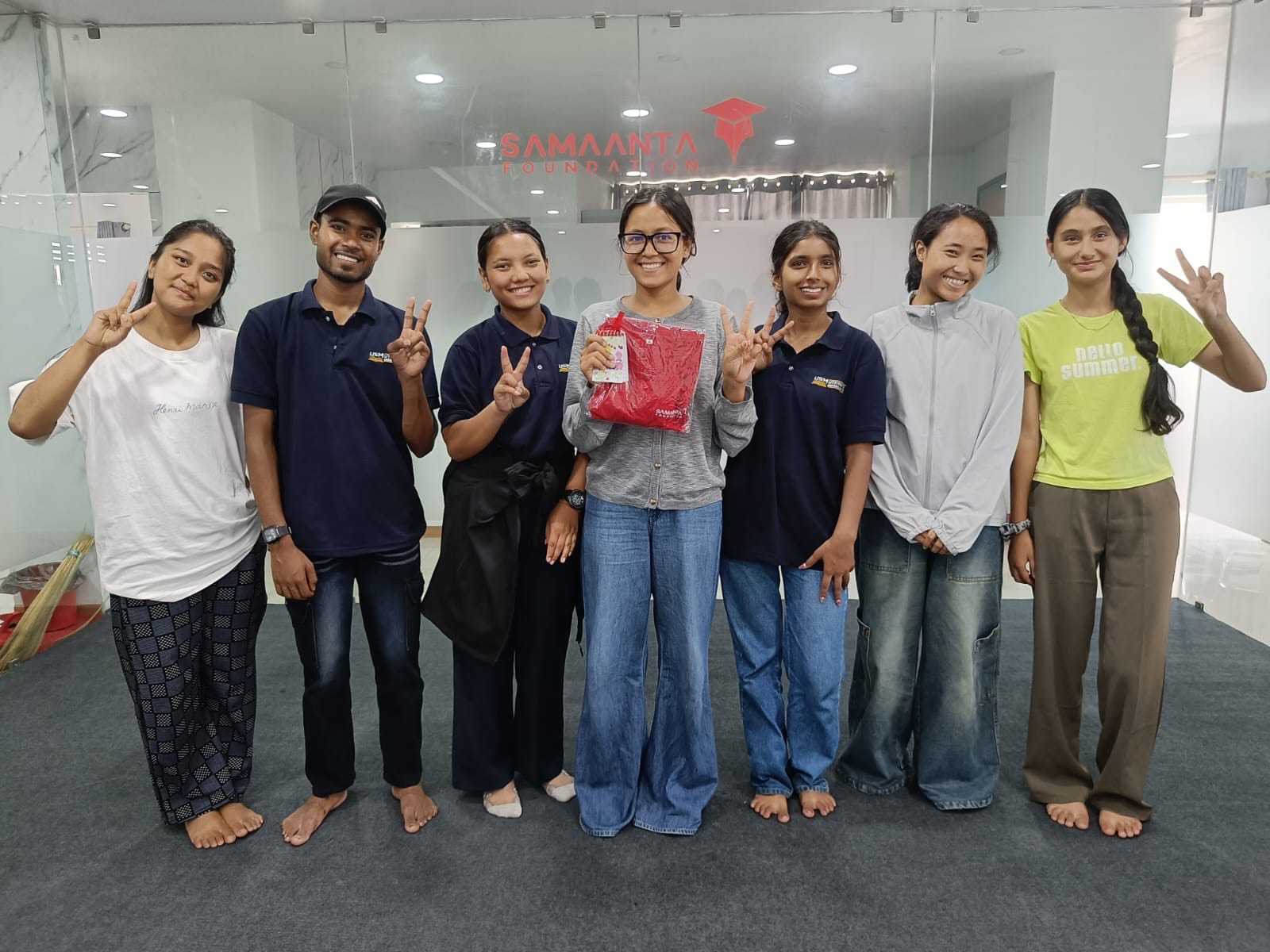
This summer took me back to my home in Nepal, and reunited me with my second family, the Samaanta Foundation. Samaanta always has a special place in my heart, as not only has it been the cornerstone of my higher education in Nepal and abroad, but it has also given me lifelong friends and an environment where I can always keep growing. After five years of being a Fellow, I finally had a chance to contribute to the foundation’s mission to provide quality higher educational opportunities to Fellows from underserved communities in Nepal. I designed and facilitated a two-week interactive educational program for seven Fellows interested in global issues and social awareness. We watched documentaries, conducted hands-on activities and got the opportunity to hear from experts, while having meaningful conversations during the program.
Over the course of two weeks, I interacted with participants from different educational backgrounds; some were incoming United World College students, while others were eleventh-grade students. I have always felt that only attending classes is not enough to gain knowledge about global issues and social awareness, which are crucial for maintaining a peaceful and pluralistic society. This is especially true in the Nepalese society, where there are diverse values, opinions, cultural beliefs and religions, yet often very limited awareness of how to embrace them. So, I decided that an interactive program could help build an inclusive community where people from different backgrounds can not only co-exist but also embrace their differences. The diverse and multicultural environment at Samaanta Foundation provided a perfect opportunity to do just that. Some of the topics of the program included the understanding of concepts like stereotypes, prejudice and discrimination, regional differences and challenges, cultural differences across the globe, climate change and others. The concepts of stereotypes, prejudice and discrimination were eye opening discoveries among participants, helping them recognize and become aware of the existing issues in the Nepalese community. With the help of these sessions, they were able to realise how the practice of these harms society as a whole.
Similarly, exploring cultural differences and being aware of political and environmental issues that exist globally was another fruitful topic for them. It helped participants become aware of different values and practices in different parts of the world while also being aware of the physical and structural conflicts between different countries. As an international student in Norway and the US, I found it crucial to be aware of these global topics and know about the ongoing and recent events in the world. Overall, observing participants’ curiosity to learn and watching them lead conversations, while being respectful towards each other about these weighty and sensitive topics, was a rewarding experience for me.
Besides the interactive educational course, I co-led the “Computer Literacy Program for Nepali Students” in my former school, Kusumakar Secondary School in Lamjung district, with my project partner, Sol Tran. The project was funded through Davis Project for Peace Grant. We conducted the project intending to make digital literacy accessible to young students from rural and disadvantaged communities in Nepal. The project successfully established a well-equipped computer lab with 18 computers. Additionally, we also conducted a three-week foundational computer skills training among 120 students from grades 8, 9 and 10.
I was extremely delighted and it felt surreal to be able to give back to my community. I am extremely grateful to the Davis Project for Peace grant that made this possible and my project partner, Sol Tran for her wholehearted support to implement this program. It was one of the most fulfilling experiences to be able to Pay it Forward by creating a step towards a holistic learning experience for the students in my school and my community.